




Discover how local IT support enhances disaster recovery outcomes by addressing everyday technical issues.

November 25, 2026
Treating everyday laptop and printer issues as low priority can quietly weaken the systems you rely on for disaster recovery. When routine support is neglected, your backup and recovery plans may not work as expected when you need them most.
A single unresolved printer fault rarely sinks a business. But a pattern of deferred repairs, ignored warning signs and untested backups can leave a company unable to recover when a real failure hits, costing far more in downtime than the fixes ever would have.
It's easy to see why routine technical support gets pushed down the list: a sluggish laptop or a jammed printer looks trivial next to a disaster recovery plan. Yet the two are more tangled together than they appear, because the discipline you bring to small faults is the same discipline your recovery systems depend on.
Treat every minor ticket as noise and you lose the early signals that something underneath is failing. A support queue that always puts laptop repairs and printer problems last is often a queue where backup and recovery systems never get properly exercised either, so the gaps stay invisible until the moment they matter most.
Understanding how these two layers connect changes where you choose to spend time and budget, which is the real subject of what follows.
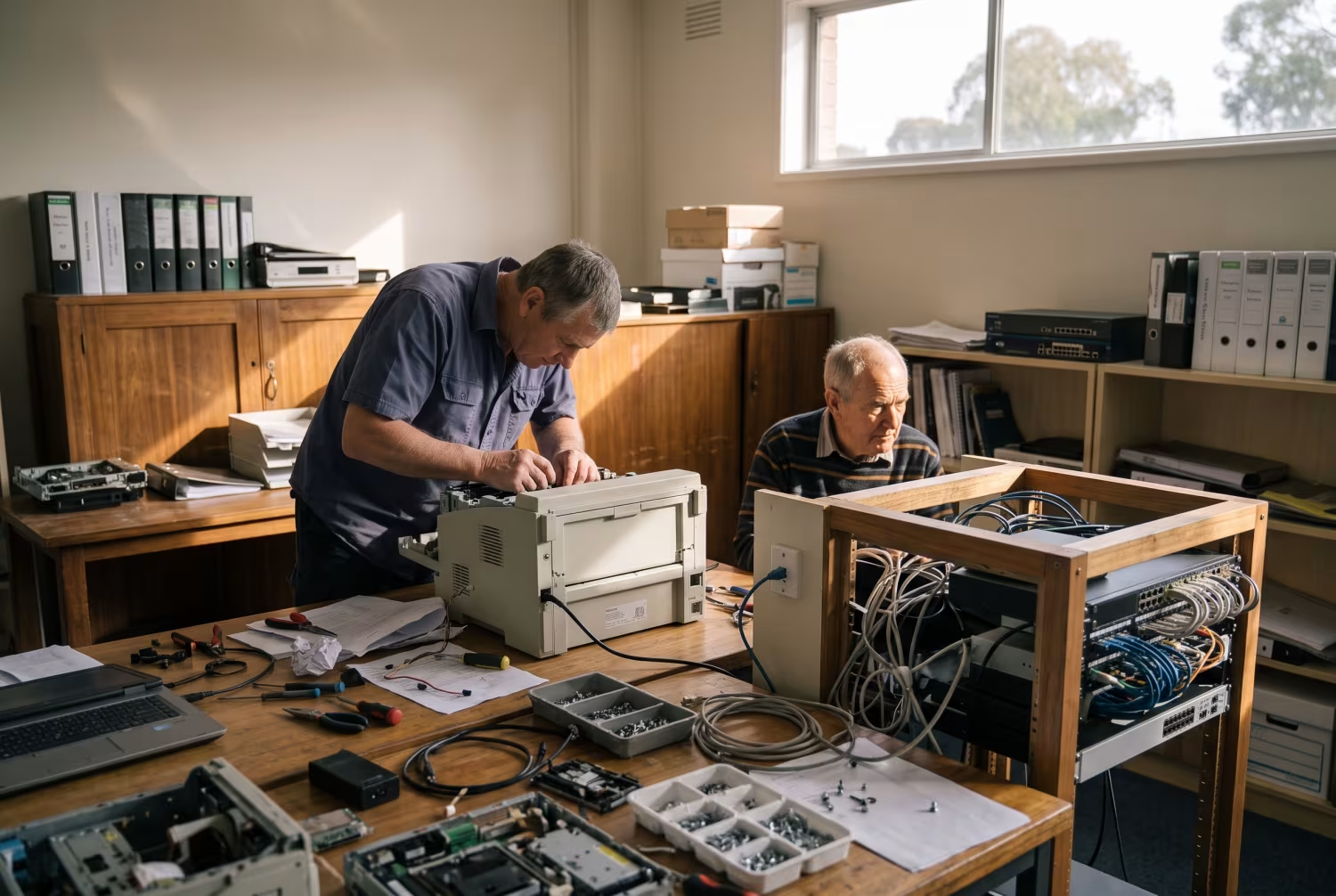
Routine technical support and disaster recovery planning usually sit in separate mental folders, one labelled daily maintenance and the other labelled insurance for rare events. That separation is understandable, but it is also where the trouble starts, because the two are more closely wired together than the labels suggest.
Dismiss a minor issue, and you risk missing the early sign of something larger. A slow laptop, for instance, can point to a failing hard drive — and if that drive happens to hold the only copy of an important file, the warning was never really minor at all. Ignore enough of these signs and the backup and recovery plan sitting on top of them is built on foundations nobody has checked.
The result, over time, is a false sense of security. A business can believe it is prepared for a disaster while its recovery systems have never actually been tested against a real-world fault, which makes them far harder to trust the one time they're needed for real.
Routine technical support does more than keep the day moving; it doubles as an ongoing test of how resilient the business actually is. Each time a technician answers a laptop repair or chases down a printer fault, they are also, almost incidentally, checking the health of the wider IT environment.
That incidental checking is where small interventions earn their keep. A recurring printer problem might trace back to outdated drivers or a network fault capable of affecting other devices, and catching it there stops a minor annoyance from growing into a larger failure.
Skip or delay that routine support, though, and those early-detection moments simply don't happen. Small problems then accumulate across months or years, quietly wearing down the reliability of the disaster recovery systems sitting behind them.
Local IT support does more than add convenience; it's a working part of how a business responds when something goes wrong. In Canberra, a nearby team means faster response times, and faster response feeds directly into a sharper understanding of the specific setup it's supporting.
Because that understanding builds up over repeated visits, technicians handling support locally start noticing patterns a remote provider would likely miss — certain laptops failing more often after a particular software update, say, or one printer model struggling against a specific network setup. Spotted early, patterns like these turn into proactive fixes that strengthen the IT setup as a whole.
Work instead with a support team unfamiliar with the business or its local context, and those same insights simply don't surface. Left unaddressed, that gap tends to leave disaster recovery plans weaker than they're assumed to be.

Everyday technical issues look small individually, but treated as low priority, their effects reach further than they first appear. The consequences below show how that happens in practice.
Ignoring a small problem removes the chance to catch a bigger one before it escalates. Systems left unchecked this way become vulnerable in ways nobody notices until later.
Devices that go unmaintained can let backup processes fail silently. The recovery plan built on top of them may then be resting on incomplete data without anyone realising.
Slow fixes chip away at staff confidence in IT support over time. By the time a real emergency arrives, the team may not know how to respond or who to call.
Support tickets left untracked tend to leave disaster recovery documentation stale alongside them. That lag shows up precisely when a fast response matters most, slowing things down during a crisis.
A neglected device is simply more likely to fail without warning. If that device plays any part in backup or recovery, its failure risks taking critical data down with it.
Spotting a support routine that's quietly undermining disaster recovery isn't always straightforward, but a handful of warning signs tend to show up first.
A strong support culture doesn't just fix problems as they land; it works to prevent the next one. Treating every ticket as a chance to improve the underlying systems keeps disaster recovery plans genuinely ready to act rather than ready on paper.
That starts with encouraging the team to report issues the moment they appear, backed by support processes that are clear and genuinely responsive. From there, recovery plans should be reviewed and updated regularly, drawing on whatever the everyday technical issues happen to reveal.
Taken together, this approach catches problems early, keeps documentation current, and builds trust between staff and the IT team supporting them. Over time, it leaves the business steadier against both small disruptions and major incidents alike.
Neglecting routine technical support can look like a way to save time or money in the short run, but the long-term cost usually outweighs whatever was saved. Left unaddressed, small problems tend to surface later as bigger failures — ones that cost more and take longer to fix than they would have the first time around.
For businesses in Canberra, investing in responsive local IT support is a practical way to guard both the systems and the reputation riding on them. It's what keeps disaster recovery plans tested, reliable and ready for the moment they're actually needed.
If support routines haven't been reviewed in a while, it's worth asking plainly: would the backup and recovery plan actually hold up in a real emergency?
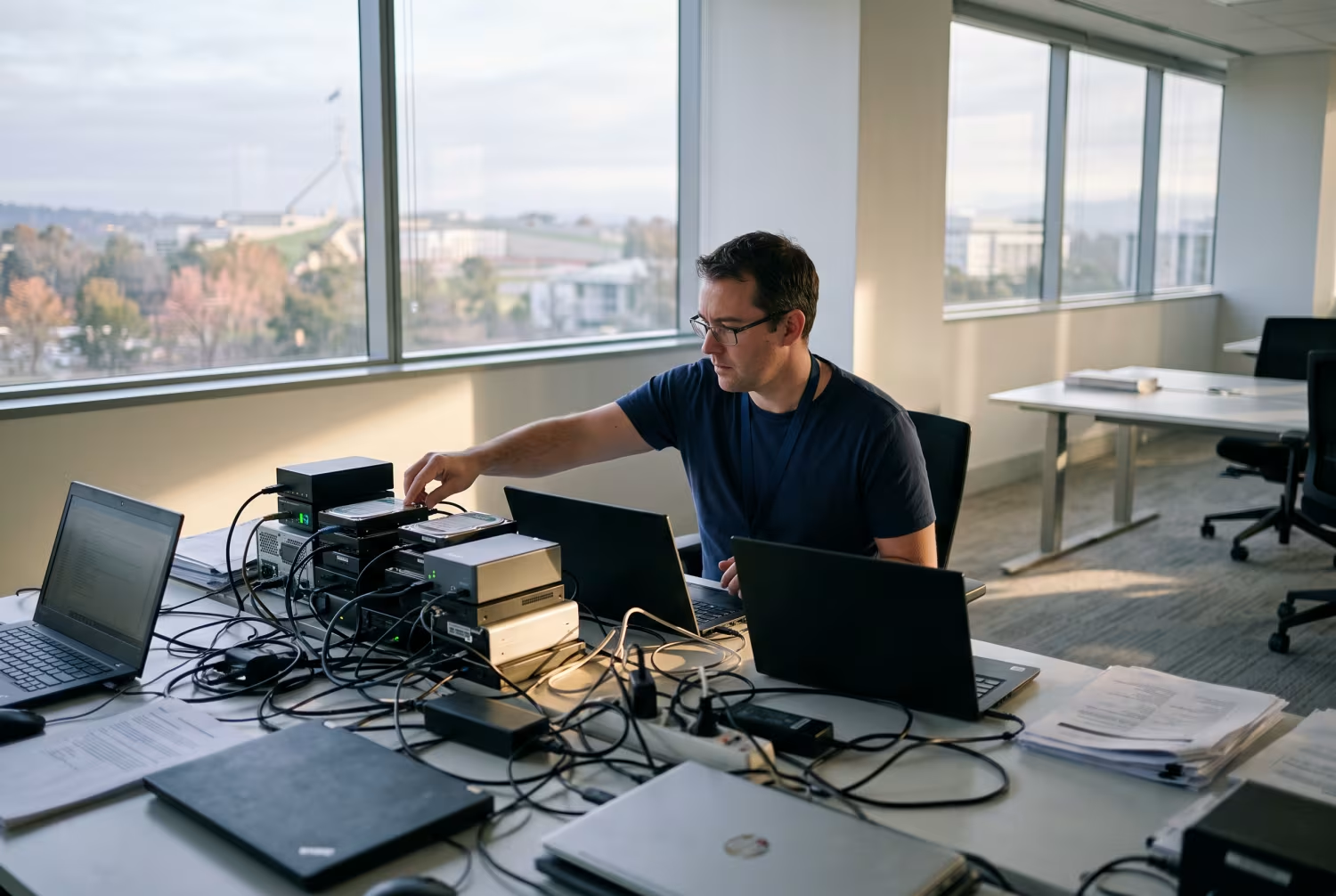
Many businesses with 20 to 100 users find themselves juggling daily IT issues while assuming their disaster recovery plans are solid. At AUIT, we understand how easy it is to overlook the link between everyday support and long-term reliability.
If you’re ready to see how your support approach could strengthen your recovery plans, we invite you to talk with us about your current setup. Let’s make sure your business is prepared for whatever comes next.
Sign up for a contract, and you’ll receive a free laptop valued at $2,500 plus a $4,000 cybersecurity assessment, giving your business a stronger foundation for IT resilience.
Claim your free laptop and assessment
Small technical issues that often go unresolved or take a long time to fix are a clear sign that support routines may be putting disaster recovery at risk. Regularly reviewing how quickly and thoroughly problems get addressed helps surface these weaknesses before they turn serious.
Computer training helps staff recognise and report issues early, which keeps IT systems healthier overall. Well-trained employees are more likely to follow the correct procedures during a crisis, which makes disaster recovery plans more effective when they're actually needed.
Yes — even a non-critical device can affect the network and backup processes around it. Prompt laptop repairs help maintain the health of the broader IT environment and reduce the risk of problems spreading unnoticed.
Printer issues that are frequent or affect multiple users often point to an underlying network or software problem. Addressing them quickly stops that problem from spreading into other parts of the IT setup.
Managed IT services offer proactive monitoring and regular maintenance, which catches problems early and keeps disaster recovery plans current. That reduces the risk of unexpected failures and leaves the business more resilient overall.