.svg)



Discover how an IT risk consultant can transform your risk management by connecting insights to real business stakes, enhancing your tech risk strategy.

October 9, 2026
An IT risk consultant’s advice only becomes valuable when a business can put a real cost on negative outcomes. Without this, most risk reports remain too generic to guide meaningful decisions.
Every IT risk consultant promises to help you manage uncertainty, but the real challenge is knowing when their advice will actually make a difference. Many businesses in Canberra bring in consultants early, hoping for clarity, but often end up with reports that feel disconnected from real decisions.
A consultant’s recommendations only become meaningful when you can clearly define what a bad outcome would cost your business. Without this, risk assessments remain abstract, and their findings rarely influence what matters most—your choices about spending, priorities, and protection.
A business that understands its own risk tolerance and the potential impact of a negative event is far better positioned to use a consultant’s expertise effectively. This is the point where risk management becomes practical, not just theoretical.

Many organisations start their risk journey by listing every possible threat, from data breaches to system failures. This process is useful for awareness, but it often stops short of what’s truly needed: understanding the consequences of those risks.
When you only identify risks, you end up with a long list of things that could go wrong. However, unless you know what each of those outcomes would actually mean for your business—lost revenue, damaged reputation, regulatory fines—you can’t prioritise or act with confidence.
A consultant can help you spot vulnerabilities, but if you haven’t worked out what a specific incident would cost you, their advice stays generic. This is why so many risk consulting reports end up in a drawer, never shaping real decisions.
The difference is clear: identifying risks is about what could happen, but understanding consequences is about what those events would do to your business. Only the second leads to meaningful action.
Engaging a consultant too early in your risk management process can feel like progress, but it often leads to wasted time and money. If you haven’t yet mapped out what a bad outcome looks like for your business, most of the consultant’s work will be based on assumptions.
This means you’ll receive broad recommendations that could apply to almost any organisation, rather than targeted advice that addresses your specific situation. The result is a report that’s hard to use when making real decisions about technology risk or compliance.
On the other hand, when you have a clear sense of your own risk appetite and the cost of potential failures, a consultant’s expertise becomes much more valuable. Their insights can be tailored to your needs, helping you make informed choices about where to invest in cybersecurity, infrastructure, or assurance.
In Canberra, where regulations and business environments can be unique, this timing is even more important. Acting too soon means you might miss the chance to align risk management with your actual business goals.
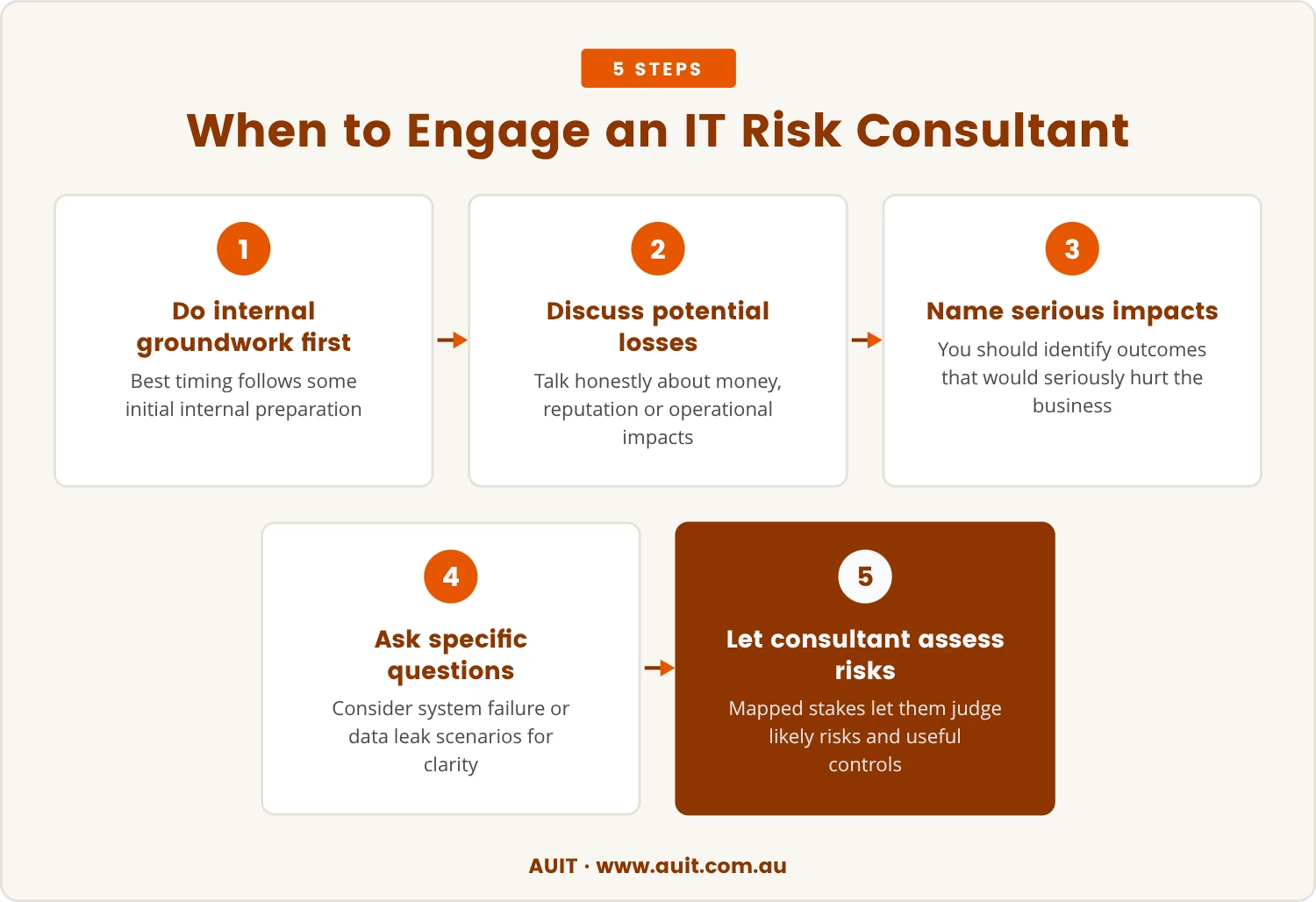
The best time to bring in an IT risk consultant is after you’ve done some internal groundwork. This means having honest conversations about what your business stands to lose if things go wrong—whether that’s money, reputation, or the ability to operate.
You don’t need to have all the answers, but you should be able to name the kinds of outcomes that would seriously impact your organisation. This clarity lets the consultant focus on what matters most to you, rather than delivering a one-size-fits-all assessment.
If you’re not sure where to start, ask yourself: What would it mean for your business if a key system failed for a day? Or if sensitive data was leaked? The more specific you can be, the more useful a consultant’s advice will be.
Once you’ve mapped out these stakes, a consultant can help you assess which risks are most likely and which controls will actually make a difference. This is where their expertise in audit, governance, and regulatory requirements pays off.
When you approach a consultant with a clear understanding of your business’s risk tolerance and the cost of negative outcomes, the conversation shifts. Instead of generic advice, you get targeted recommendations that fit your situation.
A consultant can zero in on the risks that matter most to your business, rather than covering every possible scenario.
You’ll receive advice on controls and safeguards that are relevant to your actual operations, not just industry standards.
Recommendations will be ranked based on what’s most likely to protect your business from real harm, saving you time and resources.
You can track the effectiveness of changes, because you know what success and failure look like for your organisation.
Your investment in risk services goes further, as you avoid spending on unnecessary or low-impact measures.
Advice is tailored to your regulatory environment, making it easier to meet requirements without overcomplicating your processes.
When businesses skip the step of defining what a bad outcome would cost them, they often end up with risk consulting reports that don’t connect to real decisions. These reports might list dozens of potential threats, but without context, it’s hard to know which ones deserve attention.
This disconnect leads to wasted budget, as money is spent on assessments that don’t drive action. Worse, it can create a false sense of security—believing that risk has been managed, when in reality, nothing has changed.
For a business with 20 to 100 users, every dollar counts. Investing in risk management should lead to clearer decisions and stronger protection, not just more paperwork.
Before you bring in an IT risk consultant, there are a few practical steps you can take to make sure their work will be valuable:
Taking these steps first means you’ll be ready to get the most out of a consultant’s expertise.
The real value of risk management comes when it shapes the decisions you make every day. This only happens when you can connect the risks you face to the outcomes that matter for your business.
A consultant’s insight is most useful when it helps you decide where to invest, what to protect, and how to stay compliant with regulations. Without a clear understanding of your own stakes, even the best advice can miss the mark.
If you’re in Canberra and considering risk consulting, remember that the process starts with your own understanding of what’s at risk. Only then does outside expertise become a tool for real change.

Many businesses with 20 to 100 users struggle to connect risk assessments to real decisions, and at AUIT, we understand how easy it is to end up with generic advice.
We invite you to see how our approach helps you focus on what matters most—your actual business stakes—before you invest in outside consulting.
Start by defining what a bad outcome would cost your business—this is the step we help you clarify before any consulting engagement.
You’re ready to engage a consultant when you can clearly describe what a negative event would cost your business, even if you don’t have exact figures. This means you’ve thought about which systems or data are critical, and you have a sense of the impact if something goes wrong. If you’re still unsure, start by mapping out the most important parts of your operations and what would happen if they failed.
Risk identification is about spotting potential threats, while risk management is the process of deciding what to do about them. Management involves prioritising risks based on their potential impact, choosing controls, and making sure your actions match your business goals. Identification is just the first step; management is where decisions are made.
Yes, consultants can help you understand and meet compliance obligations, but their advice is most effective when it’s linked to your business’s real risks. If you know which outcomes would cause regulatory trouble or financial loss, a consultant can tailor their recommendations to help you stay compliant without unnecessary complexity.
Technology risk can disrupt operations, expose sensitive data, or lead to financial loss. For businesses with 20 to 100 users, even a short outage or minor breach can have a big impact. Understanding your specific technology risks helps you focus on the most important protections.
You should expect clear, actionable advice that’s relevant to your business’s priorities. A good consultant will ask about your risk appetite, critical assets, and what a bad outcome would cost you. Their recommendations should help you make decisions about where to invest in security, compliance, or infrastructure.
.jpg)