.svg)



.avif)
Discover managed security services and 24/7 security monitoring to protect your business. Learn how expert providers help prevent threats and improve cyber defence.

June 30, 2026
.avif)
.avif)
.avif)
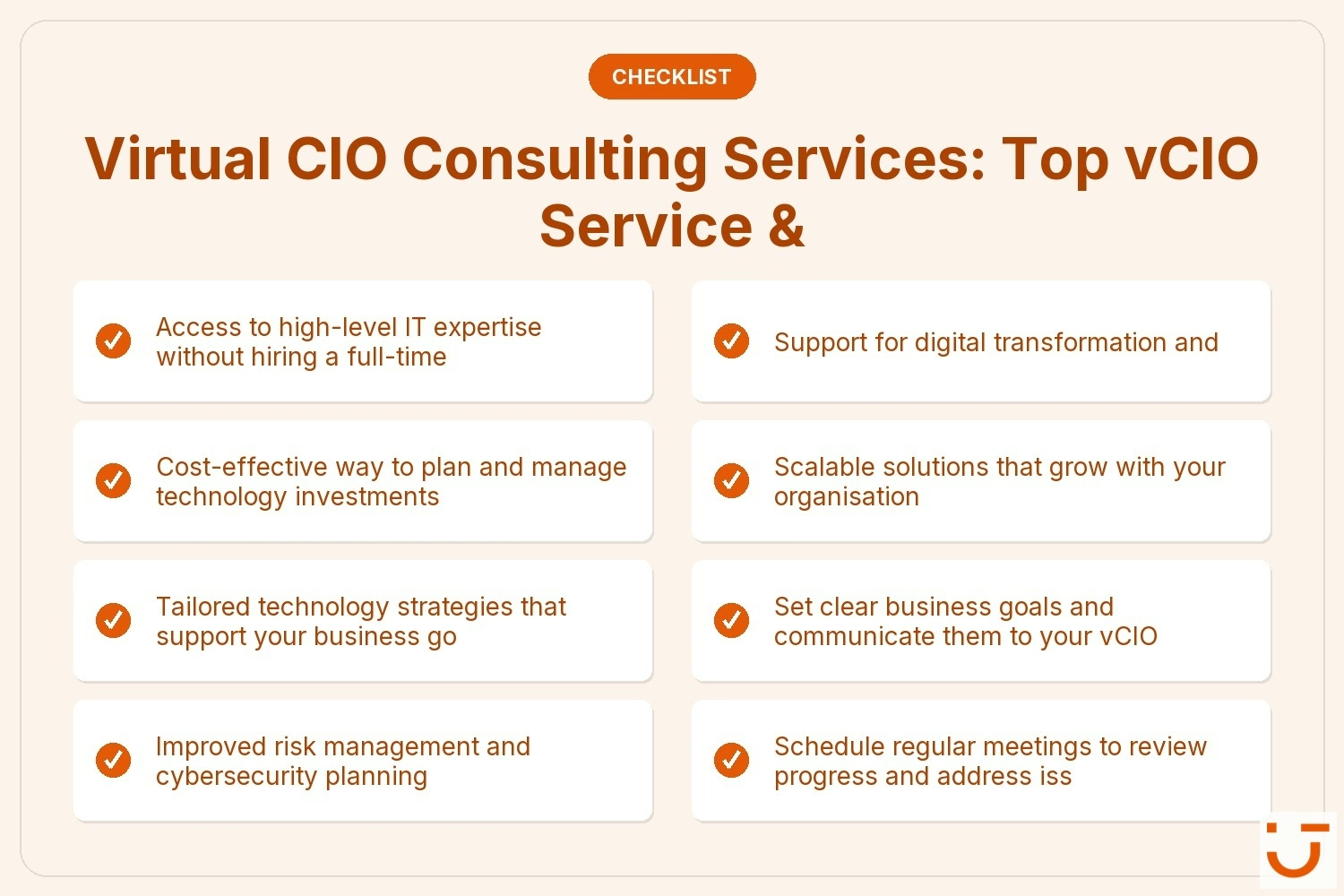
Businesses are always searching for ways to make technology work for them, not against them. Virtual CIO consulting services are a cost-effective way to access high-level IT expertise without hiring a full-time executive. In this blog, you’ll learn what virtual CIOs do, how these consulting services can help your organisation, common mistakes to avoid, and practical steps to get measurable outcomes. We’ll also cover how to tailor a technology roadmap, improve cybersecurity, and support business continuity.
Virtual CIO consulting services give your business access to experienced IT leadership without needing to hire a chief information officer full-time. A virtual CIO (vCIO) works closely with you to understand your business goals and create a technology strategy that supports them. This service is especially useful for organisations that want to outsource IT leadership, improve risk management, and build a reliable technology roadmap.
A vCIO can help you plan for digital transformation, manage cybersecurity risks, and ensure your systems are scalable as your business grows. By working with a vCIO, you get high-level advice and support tailored to your needs, without the cost of a permanent executive. This approach helps you focus on productivity and business continuity while keeping IT costs under control.

Choosing the right virtual CIO consulting services can make a big difference for your business. Here are some common mistakes to watch out for:
If you don’t have clear business goals, your vCIO can’t create an effective technology plan. Always start by outlining what you want to achieve, whether it’s better cybersecurity, improved productivity, or smoother operations.
Cybersecurity is a major risk for any organisation. Some businesses forget to include strong security measures in their technology roadmap. Make sure your vCIO includes regular risk assessments and updates to protect your data.
Every business is different. Using a one-size-fits-all approach can lead to wasted resources and missed opportunities. Your vCIO should tailor solutions to your specific needs, industry, and growth plans.
As your business grows, your IT systems need to keep up. Failing to plan for scalability can cause problems down the track. A good vCIO will help you choose systems that can grow with your business.
It’s important to track the results of your IT investments. If you don’t measure outcomes, you won’t know what’s working and what needs improvement. Ask your vCIO to provide regular reports and updates.
Unexpected events can disrupt your operations. Some businesses wait too long to create a business continuity plan. Your vCIO should help you prepare for disruptions so you can recover quickly.
Good communication between your team and your vCIO is key. Without regular updates and feedback, it’s easy for projects to go off track. Make sure you have clear channels for sharing information and concerns.
Working with a virtual CIO brings several important advantages:

Virtual CIO managed services go beyond advice—they also help you put plans into action. By partnering with a vCIO, you get ongoing support for technology planning, system upgrades, and staff training. This hands-on approach ensures your IT investments deliver measurable outcomes, such as increased productivity, reduced downtime, and stronger cybersecurity.
A vCIO will regularly review your technology roadmap and adjust it as your business changes. This means you’re always working towards your goals and can quickly respond to new challenges or opportunities. With managed services, you get peace of mind knowing your IT systems are in expert hands.
Digital transformation is about using technology to improve every part of your business. Here’s how a vCIO can help you make this shift:
A vCIO starts by reviewing your existing systems and processes. This helps identify gaps, outdated tools, and areas for improvement.
Next, your vCIO creates a clear plan for upgrading systems, introducing new tools, and supporting your business goals. This roadmap guides your digital transformation journey.
Protecting your data is essential. Your vCIO will help you implement security measures, train staff, and monitor for threats.
As your business grows, your technology needs will change. A vCIO ensures your systems can handle more users, data, and new services.
New technology is only useful if your team knows how to use it. Your vCIO can organise training to boost productivity and confidence.
Digital transformation is ongoing. Your vCIO will track results, gather feedback, and update your plan as needed.

Getting started with virtual CIO consulting services is straightforward. First, define your business goals and identify the main challenges you want to solve. This could include improving cybersecurity, planning for growth, or boosting productivity. Next, choose a vCIO service provider with experience in your industry and a proven track record.
Work closely with your vCIO to create a technology roadmap that fits your budget and timeline. Make sure you have regular check-ins to review progress and adjust plans as needed. Finally, encourage open communication between your team and your vCIO to ensure everyone is on the same page.
To make the most of your virtual CIO partnership, keep these tips in mind:
Following these best practices will help you get the full value from your virtual CIO consulting services.
Are you a business with 20 or more employees looking for expert IT guidance without the cost of a full-time executive? Our team understands the unique challenges growing businesses face when it comes to technology planning, risk management, and digital transformation.
We specialise in virtual CIO consulting services and virtual CIO managed services. If you want measurable outcomes, improved business continuity, and a technology roadmap tailored to your needs, contact us today. Let AUIT help your organisation achieve its goals with reliable, cost-effective IT leadership.
A vCIO, or virtual CIO, is an outsourced expert who provides high-level IT leadership without being a full-time executive. Unlike a traditional CIO, a vCIO works remotely and often serves multiple organisations, making it a cost-effective option for businesses that need expert advice but don’t require a permanent chief information officer.
A vCIO can help your business develop a technology roadmap, manage risk, and support digital transformation. This approach allows you to tailor IT leadership to your needs and budget, while still achieving your business goals.
Consulting services can assess your current IT setup and identify risks that could disrupt your operations. By working with a vCIO, you can develop a business continuity plan that covers data backup, disaster recovery, and system redundancy.
This planning helps your organisation stay productive during unexpected events and ensures you can recover quickly. A vCIO service can also update your plan as your business grows or as new risks emerge.
A vCIO service offers access to experienced IT leadership without the cost of hiring a full-time executive. You get tailored advice on technology planning, risk management, and cybersecurity.
This service helps you create a technology roadmap that supports your business goals and ensures your systems are scalable and reliable. It’s a practical way to improve productivity and support digital transformation.
vCIO consulting helps your business use technology to improve operations and stay competitive. A vCIO will assess your current systems, identify opportunities for improvement, and create a step-by-step plan for digital transformation.
They also help with staff training and ensure your new systems are secure and scalable. This approach makes it easier to adapt to changes and achieve measurable outcomes.
Tracking measurable outcomes lets you see the real impact of your IT investments. Your vCIO can set clear goals and use data to show progress, such as reduced downtime, improved productivity, or better cybersecurity.
This information helps you make informed decisions and adjust your strategy as needed. It also ensures your organisation gets the full value from virtual CIO managed services.
Look for a provider with experience in your industry and a strong track record of delivering results. Make sure they offer tailored solutions and can support your business as it grows.
Ask about their approach to cybersecurity, risk management, and technology planning. A good provider will work closely with you to understand your needs and help you achieve your business goals.